Laser hair removal has become a popular choice for many seeking smooth skin. However, understanding how it works on different skin tones is crucial. Dr. Ken Williams, a renowned dermatologist, emphasizes, “The technology behind laser hair removal can yield great results for dark skin, but precautions are essential.”
The process uses concentrated light to target hair follicles. For dark skin, the contrast between the skin tone and hair color helps the laser identify its target. However, darker skin contains more melanin, which can absorb the laser energy. This varies the effectiveness and safety of the treatment.
Practitioners must adjust settings for dark skin types. Often, multiple sessions are needed to achieve desired results. Some patients may experience post-treatment irritation or changes in pigmentation. It is vital for patients to research and choose qualified professionals. The reliability of the treatment hinges on expertise and careful execution. Understanding how does laser hair removal work on dark skin can empower individuals to make informed choices.
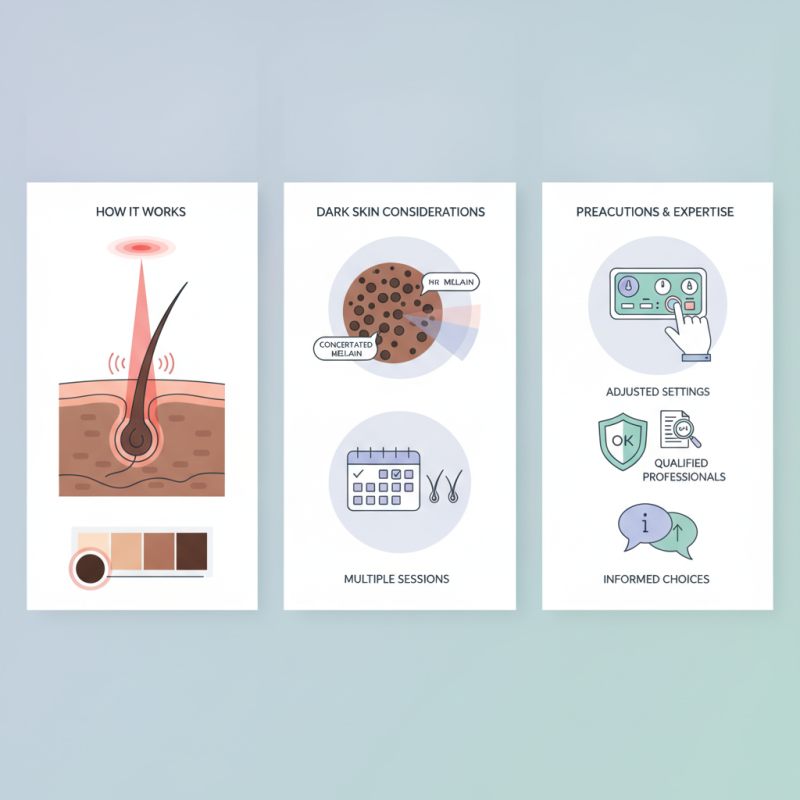
Laser hair removal is a popular method, especially for those with dark skin types. Understanding how this technology works is essential for effective treatment. The laser targets melanin in the hair follicle, delivering energy to destroy it. Dark skin contains more melanin, which can help improve the results. However, the process requires careful calibration to avoid skin damage.
Not all lasers are suitable for darker skin tones. Certain wavelengths work better, minimizing risk while maximizing effectiveness. Practitioners must be skilled and knowledgeable about these differences. Unqualified treatments can lead to burns or uneven results. It's crucial to consult professionals who understand the nuances of skin types and hair colors.
Expect variations in results. Some individuals may require multiple sessions for desired outcomes. Hair growth cycles affect effectiveness. Patience and realistic expectations are vital. Every method carries risks and potential for imperfection. A thoughtful approach to laser hair removal can lead to improved confidence and satisfaction.
Laser hair removal is a popular method for achieving long-lasting hair reduction. The process targets hair follicles using focused light. This technology relies on the contrast between the hair color and the skin tone. For dark skin types, achieving effective results requires specialized knowledge and equipment.
Dark skin has more melanin, making it more challenging for traditional lasers to differentiate between hair and skin. In recent years, advancements have led to the development of lasers that can safely treat dark skin. These lasers are designed to target the pigment in the hair while minimizing the risk of skin damage. Providers must possess expertise in this area to adjust settings appropriately.
Despite these advancements, discrepancies in results can occur. Some individuals may experience side effects like skin irritation or discoloration. It's essential to have realistic expectations and consult with experienced professionals. A thorough consultation can help identify the best approach tailored to individual skin types and hair characteristics. The science behind laser hair removal for dark skin is evolving, but ongoing awareness and adaptation remain crucial for optimal outcomes.
Laser hair removal can be challenging for individuals with dark skin types. The main issue lies in the contrast between the hair and skin color. Dark skin contains more melanin, which can absorb the laser energy intended for the hair follicles. This can lead to ineffective treatment or skin damage if the wrong settings are used.
Experts recommend using specific lasers designed for darker skin. These lasers, like Nd:YAG, penetrate deeper and are less absorbed by melanin. It’s crucial to choose a qualified practitioner experienced with dark skin. They can adjust settings to minimize risks. Yet, even with the right approach, some individuals may experience pigmentation changes after treatment.
Patients should also have realistic expectations. Laser hair removal works best on coarse, dark hair. Fine or light hair might not respond as effectively. Moreover, multiple sessions are often needed for desired results. Each person’s skin reacts differently, so responses can vary. Open communication with the practitioner about concerns is essential for a successful experience.
Laser hair removal can be effective for
dark skin types, but it requires special considerations.
The key is to choose the right laser technology.
Nd:YAG lasers are often preferred for darker skin tones.
They penetrate deeper into the skin while minimizing damage to the outer layers.
This reduces the risk of hyperpigmentation,
a common concern for dark skin.
Understanding skin and hair contrast is vital. Darker skin contains more melanin, which
absorbs light energy. Therefore, practitioners must adjust settings carefully.
Too much energy can cause burns. Proper skin assessment before treatment is crucial.
Always consult a certified professional who has
experience with diverse skin types.
Post-treatment care plays a vital role in ensuring safety.
Avoid sun exposure for several weeks after sessions.
Use sunblock to protect treated areas. Hydration and moisturizers can also assist in
recovery. Risks still exist, but when done correctly,
laser hair removal can yield
safe and effective results for dark skin.
Caring for dark skin after laser hair removal is crucial. Proper post-treatment care can affect results significantly. The skin may be more sensitive to laser treatments. Therefore, following specific guidelines is essential.
Hydration is vital. Moisturizers help prevent dryness and irritation. Alcohol-free products reduce the risk of further irritation. Applying a gentle sunscreen is non-negotiable. UV exposure can lead to hyperpigmentation, especially in darker skin types. Using sun protection reduces this risk.
Regular check-ins with a skincare professional are beneficial. They can monitor your skin’s response to treatment. If any adverse effects appear, immediate action may be necessary. Not all reactions are predictable. Skin types can react distinctively to lasers. Adjustments may be required based on individual responses. Staying informed and proactive in skin care can enhance overall results.
The bar chart above illustrates the effectiveness of laser hair removal for different skin types. Light skin typically shows the highest effectiveness at 90%, while dark skin types may see effectiveness drop to around 50%. This variation highlights the importance of tailored treatments and post-care for optimal results.
: Laser hair removal is a technique that uses laser technology to target and destroy hair follicles.
Dark skin contains more melanin, allowing the laser to work efficiently at targeting hair follicles.
It's crucial to choose specific laser types and calibrate settings to avoid skin damage and burns.
Many individuals need multiple sessions due to varying hair growth cycles and desired outcomes.
A proper skin assessment and consultation with a qualified professional are essential before treatment.
Avoid sun exposure, use sunblock, and hydrate treated areas to promote healing after sessions.
Risks include burns, uneven results, and potential hyperpigmentation in dark skin if not done correctly.
Laser hair removal technology utilizes concentrated beams of light to target and disable hair follicles for long-term hair reduction. However, when it comes to understanding "how does laser hair removal work on dark skin," it’s important to recognize that the increased melanin levels in darker skin can absorb more laser energy, potentially leading to complications such as burns or discoloration.
The science behind this process involves using specific wavelengths of light that thermally target hair without damaging surrounding skin, which is crucial for safety. Despite the challenges posed by darker skin types, advancements have led to the development of specially designed lasers and techniques that enhance efficacy while minimizing risk. Following best practices for treatment and adhering to a proper post-treatment care regimen are vital for achieving optimal results and maintaining skin health after the procedure.
