China Best What Is the Safest Permanent Hair Removal Method?

Time:2026-10-02 Author:Sienna
0%

When asking, “What is the safest permanent hair removal method,” readers deserve more than a quick beauty claim. They need evidence, skin expertise, and realistic expectations. The U.S. Food and Drug Administration recognizes electrolysis as permanent hair removal, while laser devices are generally cleared for permanent hair reduction. That distinction matters.

Electrolysis treats each follicle with a fine probe and controlled electrical current. It can work across skin tones and hair colors, including lighter hair that absorbs little laser energy. However, treatment is slow. A small upper-lip area may require repeated appointments over many months. Skin sensitivity, temporary redness, and rare scarring remain possible.

Laser hair removal is often faster for larger areas. The American Academy of Dermatology Association warns that burns and lasting pigment changes can occur, especially with unsuitable settings or inexperienced operators. A patch test, medical history review, and appropriate wavelength are essential. Darker skin needs particular care.

Dermatologist Dr. Arisa Ortiz has stated, “Laser hair removal is a safe and effective treatment when performed by a trained professional.” Her point is useful, but incomplete. “Safe” depends on consultation, device selection, operator training, and aftercare.

The International Society of Aesthetic Plastic Surgery reported millions of laser hair-removal procedures worldwide in its recent global survey, showing strong demand. Popularity is not proof of safety.

This guide compares electrolysis and laser treatment through published guidance, clinical risks, and practical experience. It also examines cost, discomfort, skin type, hair color, and maintenance. No method is risk-free. The safest choice is personal, professionally assessed, and carefully performed.
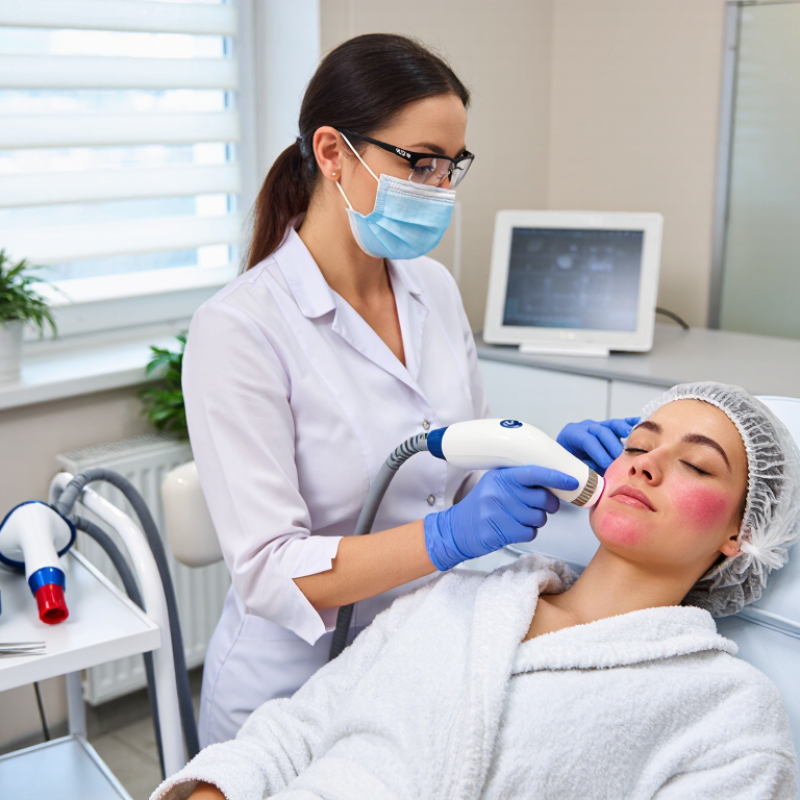
China Best What Is the Safest Permanent Hair Removal Method?

FDA-Recognized Permanent Hair Removal: Why Electrolysis Leads in Safety

China Best What Is the Safest Permanent Hair Removal Method?

FDA-Recognized Permanent Hair Removal: Why Electrolysis Leads in Safety

For permanent results, electrolysis has the strongest regulatory position. The U.S. Food and Drug Administration classifies electrolysis devices for permanent hair removal. Laser devices are generally classified for permanent hair reduction, not guaranteed removal. This distinction matters. The American Academy of Dermatology also explains that electrolysis can remove hair permanently across all skin tones and hair colors. It targets each follicle with a fine probe, so treatment feels precise, like a brief warm pinch.

Safety still depends on technique. The FDA does not publish a simple head-to-head safety ranking for every method. That gap deserves attention. Temporary redness, swelling, or tenderness can occur after electrolysis. Poor sterilization or incorrect settings may increase infection, burns, pigment changes, or scarring risks. A qualified electrologist should inspect the skin, explain expected sessions, and use properly sterilized equipment. A small test area is sensible, especially for sensitive skin or darker complexions.

Tips: Ask about training, probe sterilization, and aftercare. Avoid treatment over irritated skin. Do not judge results after one appointment; hair grows in cycles. Record redness, discomfort, and healing time. Honest progress tracking helps, although individual response can vary. Consult a licensed medical professional when scarring, medication use, or hormonal hair growth is involved.

Sources: U.S. FDA, “Removing Hair Safely” and device classification records; American Academy of Dermatology, “Hair Removal.”

Laser Hair Reduction: AAD Data on Results After Six or More Sessions

For people comparing China’s best permanent hair removal options, laser reduction deserves careful attention. The American Academy of Dermatology notes that many patients need six or more sessions to achieve noticeable, lasting reduction. Treatments are usually spaced several weeks apart, because lasers target hairs during active growth. One appointment cannot treat every follicle at once.

Results vary with hair color, skin tone, hormones, and treatment settings. Darker hair often responds more clearly than blonde, gray, or red hair. A qualified dermatologist should assess the skin before treatment and choose suitable energy levels. Cooling may feel like a brief snap against the skin. Mild redness around each follicle can appear afterward and often settles quickly.

Safety is not automatic. Incorrect settings may cause burns, pigment changes, or scarring, especially on recently tanned skin. The AAD also explains that laser treatment can reduce hair for a long time, but some regrowth may occur. Maintenance sessions might be needed. I would not promise perfectly smooth skin forever; that expectation is often the weakest part of the decision. A consultation, medical history, and clear aftercare instructions matter more than a low advertised price. Avoid waxing before sessions, protect treated skin from sunlight, and report unusual pain or blistering promptly.

China Best What Is the Safest Permanent Hair Removal Method? - Laser Hair Reduction: AAD Data on Results After Six or More Sessions

Evidence-based comparison of laser hair reduction after six or more sessions
Data dimension Evidence-based information Practical interpretation
Treatment classification Laser treatment is generally described as permanent hair reduction, not guaranteed permanent removal of every hair. A substantial long-term decrease in regrowth is expected, but some hairs may return and maintenance sessions may be needed.
Number of sessions The American Academy of Dermatology states that most patients need approximately six or more treatments because hair grows in different cycles. Results should be evaluated after a complete treatment course rather than after one or two appointments.
Expected result after six or more sessions Patients commonly experience less hair, slower regrowth, and finer or lighter regrowing hairs. The degree of reduction varies among individuals. A precise universal percentage cannot be promised because outcomes depend on hair color, hair thickness, skin tone, treatment area, hormonal factors, and device settings.
Best hair response Laser energy is absorbed more effectively by coarse, pigmented hair than by very fine or lightly pigmented hair. Dark, coarse hair generally responds more predictably than blonde, white, gray, or red hair.
Skin-tone considerations Laser treatment can be performed on many skin tones, but the risk of burns or pigment changes increases when unsuitable settings or equipment are used. A consultation and a test spot may help determine appropriate settings, especially for darker or recently tanned skin.
Common short-term effects Temporary redness, swelling around hair follicles, warmth, or mild discomfort can occur after treatment. These effects usually settle within a short period; aftercare instructions should be followed carefully.
Less common risks Blistering, scarring, persistent pigment changes, and paradoxical hair growth are uncommon but recognized risks. Risk is reduced when treatment is provided by a qualified medical professional experienced with the patient’s skin type.
Safety standard The safest approach is individualized treatment after reviewing medications, tanning history, skin conditions, and the risk of abnormal scarring or pigment change. Provider qualifications, correct device selection, protective eyewear, cooling, and medically appropriate settings are essential.
Hormonal influences Hormonal conditions can stimulate new hair growth and may reduce the durability of results. Additional sessions or maintenance treatment may be necessary when an underlying hormonal issue is present.
Maintenance Some patients require occasional maintenance treatments after the initial course because new or previously inactive hairs can appear. Long-term success should be measured by sustained reduction in regrowth, not absolute hair elimination.
Alternative for unpigmented hair Electrolysis does not depend on hair pigment and may be considered for individual light-colored hairs, although treatment time and comfort vary. The most suitable method depends on hair color, treatment area, skin type, medical history, budget, and tolerance for repeated sessions.
Important interpretation: No single method is safest or most effective for every person. Laser hair reduction is generally considered safe when appropriately selected and performed by a qualified professional, but it should be presented as long-term hair reduction rather than guaranteed permanent removal.

Safety Comparison: Electrolysis, Laser, IPL, Waxing, and Depilatory Creams

The safest permanent hair removal method depends on skin, hair, and operator skill. Electrolysis remains the only method recognized by the U.S. Food and Drug Administration for permanent hair removal. It treats each follicle with a fine probe and electrical current. Results can be lasting, but treatment is slow and may cause redness, pigment changes, scarring, or infection when performed poorly.

Laser treatment offers faster coverage and usually produces permanent hair reduction, not guaranteed removal. The FDA defines permanent reduction as stable long-term reduction after a treatment cycle. A 2023 review in the Journal of the American Academy of Dermatology reported that temporary redness and swelling were common, while burns and pigment changes were less frequent. Darker skin needs careful wavelength selection and cooling. Experience matters greatly. Hair can rarely grow thicker around treated areas.

IPL uses broad-spectrum light and has less consistent clinical evidence than medical laser systems. It may increase irritation risk when settings are unsuitable. Waxing is temporary and can cause skin lifting, folliculitis, or burns from overheated wax. Depilatory creams dissolve hair at the surface. They are painless for many users, but chemical irritation can appear within minutes. Patch testing helps, though it cannot remove every risk. I would not call any method universally safest. Consultation with a qualified dermatology professional remains the more reliable choice.

What Is the Safest Permanent Hair Removal Method?

Safety depends on skin tone, hair color, treatment area, device settings, and practitioner experience. This evidence-informed comparison uses a relative risk index from 1 (lower) to 5 (higher) for common adverse effects when treatments are performed correctly. It is not a clinical risk score.

Key takeaway: Electrolysis is the only method recognized for permanent hair removal, but it may cause temporary redness, pigment changes, infection, or scarring if performed improperly. Laser and IPL generally provide long-term hair reduction and carry higher risks of burns and pigment changes, especially on darker or recently tanned skin. Waxing and depilatory creams are temporary methods; waxing can cause burns, folliculitis, and skin lifting, while creams can cause chemical irritation or burns.

Risk categories are based on commonly documented adverse effects from dermatology and public-health guidance. A lower index does not guarantee safety; patch testing, eye protection, correct settings, and treatment by a qualified professional remain important.

Choosing China’s Safest Clinic: FDA-Cleared Devices and Licensed Practitioners

Choosing China’s safest permanent hair removal clinic begins with verification, not price. Look for devices legally registered for use in China and supported by FDA clearance documentation when applicable. The U.S. Food and Drug Administration explains that clearance confirms substantial equivalence to an existing device; it does not guarantee perfect results or eliminate treatment risks. Ask the clinic to show the device model, registration details, maintenance records, and protective eyewear before treatment.

The practitioner matters just as much. Choose a licensed medical professional with documented training in laser or light-based procedures. The American Academy of Dermatology reports that patients commonly need six or more sessions, because hair grows in different cycles. Darker skin requires careful wavelength selection and conservative settings. A small test patch can reveal excessive heat, irritation, or pigment changes before a larger area is treated. Expect temporary redness around each follicle.

Safety is not only about the machine. A reputable clinic should review medications, skin conditions, recent tanning, and previous reactions. It should explain realistic reduction rather than promise absolute permanence. The International Society of Aesthetic Plastic Surgery’s global procedure reporting shows the continuing popularity of non-surgical aesthetic treatments, but popularity is not proof of quality. I would also question clinics using vague “FDA-approved” language, since clearance and approval are different terms. Even careful clinics can misjudge sensitive skin; transparent follow-up and accessible medical support remain essential.

Skin-Type Risks: Professional Guidelines for Preventing Burns and Pigmentation

The safest permanent hair removal method depends on your skin tone, hair color, and medical history. Electrolysis can treat individual hairs across many skin tones, but it requires repeated sessions and skilled probe placement. Laser treatment usually offers faster reduction, especially for dark hair. However, darker or recently tanned skin needs careful wavelength selection and conservative settings.

Burns and pigmentation changes are the main preventable risks. A qualified practitioner should examine your skin before treatment. They should ask about tanning, keloid scars, medications, and previous reactions. A patch test is essential. Small areas first. The skin should feel warm, not sharply painful. On deeper skin tones, excessive heat may trigger post-inflammatory hyperpigmentation or lighter patches. Pale skin can still burn, particularly after sun exposure or aggressive settings. “Stronger” does not always mean safer or more effective.

Tips:

  • Avoid tanning before and after treatment.
  • Do not wax shortly before laser sessions.
  • Follow cooling and sun-protection instructions carefully.
  • Report blistering, prolonged redness, or darkening promptly.
  • Take clear photographs before each session, because memory is unreliable.
  • Professional training matters, yet it is not a guarantee.
  • I would question any clinic promising painless, permanent results for everyone.
  • Different skin areas can also react differently, so treatment settings may need adjustment.

FAQS

What is considered the safest permanent hair removal method?

Electrolysis has the strongest recognition for permanent hair removal. It treats follicles individually with a fine probe. Results still depend on skill, hygiene, and skin response. No method is risk-free.

Is laser hair removal permanent?

Laser treatment usually provides permanent hair reduction, not guaranteed complete removal. Several sessions are commonly needed. Hair grows in cycles. Some regrowth may remain.

Can electrolysis treat every skin tone and hair color?

Electrolysis can treat individual hairs across many skin tones and hair colors. It may feel like a brief warm pinch. Repeated appointments are usually necessary. Progress can be slow.

What should a safe clinic verify before treatment?

Ask to see device registration, maintenance records, training documents, and sterilization procedures. The clinic should review medications, tanning, skin conditions, and previous reactions. Price alone proves nothing.

Why is a patch test important?

A small test area can reveal excessive heat, irritation, or pigment changes. This matters especially for darker, sensitive, or recently tanned skin. Small areas first.

Can darker skin develop burns or pigmentation changes?

Yes. Excessive heat may cause burns, darker patches, or lighter patches. Conservative settings and suitable wavelengths can reduce risks. Stronger settings are not always better.

What should treatment feel like?

The treated skin may feel warm, with temporary redness or tenderness around follicles. Sharp pain, blistering, or prolonged swelling deserves prompt attention. Stop and report it.

How can someone judge treatment progress honestly?

Do not judge results after one appointment. Record hair growth, redness, discomfort, and healing time. Take clear photographs before sessions. Personal responses vary, sometimes unpredictably.

Conclusion

What is the safest permanent hair removal method? Electrolysis is widely recognized by the FDA as a permanent hair removal option because it treats individual follicles with controlled electrical energy. When performed by a qualified practitioner using sterile equipment, it can offer lasting results across different skin tones and hair colors. Laser hair reduction is another effective choice, with professional dermatology guidance indicating noticeable reduction after six or more sessions, although maintenance treatments may be needed.

Safety depends on the method, skin type, treatment area, and practitioner’s experience. Compared with waxing and depilatory creams, electrolysis and laser treatments can provide longer-lasting results, while IPL may require additional caution and ongoing care. People choosing a clinic in China should verify practitioner qualifications, device clearance, hygiene standards, and consultation procedures. A professional should assess skin tone, hair characteristics, and medical history to reduce the risk of burns, irritation, or pigmentation changes, especially for darker or sensitive skin.

Sienna

Sienna

Sienna is a skilled marketing professional with a deep expertise in our company’s core products and services. With a passion for innovation and detail, she plays a pivotal role in crafting insightful blog posts that not only highlight the unique features of our offerings but also provide valuable......